
How Arrest Warrants Work in Eaton County
An arrest warrant is a court order, not an accusation that settles anything. It tells an authorized officer to take a person into custody and bring that person before a judge. A sworn complaint and a probable-cause finding come first. The charge itself still has to be proven as the case moves forward. In Eaton County, the path runs from investigation to prosecutor review, then complaint, probable-cause review, issuance, arrest, arraignment, and bond. A felony can continue on to a preliminary examination and bindover. Where a case sits in that sequence tells you which office to call.
Eaton County Arrest Warrant Review and Issuance
People often assume the prosecutor issues warrants. That is not quite right. In Eaton County, the Prosecuting Attorney reviews a law-enforcement request and authorizes the complaint, while a judge or district court magistrate issues the process under MCL 764.1. The split matters for a reader. It decides where to look and who can answer questions about the order itself. The Eaton County criminal case process page lays out the same stages in county language. Ask the court, not the prosecutor's office, about the current status of an Eaton County arrest warrant.
Arrest Warrants: What They Contain
Michigan arrest warrant paperwork follows a set structure. The warrant-request and search-warrant forms the prosecutor's office publishes show how much of the file gets built before a judge signs anything. A public copy usually runs shorter than the working file in Eaton County.
| Issuing court and judicial officer | The court that authorized the process |
|---|---|
| Warrant or process type | Arrest, bench, or another order |
| Complaint or case number | The number assigned to the criminal case |
| Offense | The charge and its degree |
| Probable cause | The sworn statement or attached affidavit |
| Investigating agency | The department that requested the charge |
| Command and return | The order to a peace officer and what came back |
Eaton County Arrest Warrants: Complaint to Court
Most Eaton County arrest warrants travel the same road, and each stretch belongs to a different office. The investigating department writes the report and asks for the charge. The prosecutor reviews it and authorizes a complaint. That complaint is filed and sworn in the district court. A magistrate or judge then weighs probable cause and signs the warrant. An officer serves it, and the person is arraigned and given bond or release conditions.
Process: investigation › warrant request › prosecutor review › complaint under oath › probable cause › warrant issued › service › arraignment and bond
A felony keeps moving after arraignment. The district court holds a preliminary examination, which can end in a bindover that sends the Eaton County file to the circuit court.
How Warrants Get Served in Eaton County
The Eaton County Sheriff and the municipal police departments serve process locally. Deputies cover the county and the contract townships. City officers work their own jurisdictions. Federal process runs through a separate federal system. The agency that serves an order is often not the office holding the file. Deputies may execute a warrant and book someone into the county jail while the docket stays with the clerk whose court issued the order. Note: A service record shows what an agency reported back to the court, not a court order changing the warrant itself. So a call about an Eaton County warrant still goes to the issuing court.
Eaton County Warrantless Arrests and Warrant Records
Not every custody event starts with a warrant. Michigan allows an arrest without one in defined circumstances. The prosecutor's office publishes a warrantless-arrest affidavit for those cases. A person can therefore be booked and appear in court with no arrest warrant ever issued. Read the paperwork closely in Eaton County. A docket entry for a warrantless arrest and a docket entry for a warrant are different records.
Arrest Warrants, Summonses, and Bench Warrants
Three kinds of court process can bring a person before an Eaton County judge. Each carries different consequences down the line.
| Point | Arrest Warrant | Summons | Bench Warrant |
|---|---|---|---|
| Starting event | Complaint and probable cause | Charging decision in a lower-level matter | Missed court obligation |
| Custody | Authorizes arrest | No arrest if the person appears | Authorizes arrest |
| Where it fits | Start of the criminal case | Start of the criminal case | Later in an existing case |
A missed summons can come back as a bench warrant later. That is why an ignored Eaton County notice is never the safe route.
Eaton County Warrant Bond and Jail Route
After an arrest, the court sets bond and the public posts it at the jail. Eaton County's jail FAQ points to the bond lobby at Door #3, at the end of the walkway on the right side of the building, where a deputy and a kiosk are available. Deposits go through an automated account line, the lobby kiosk, or a money order mailed to the inmate. Personal checks and cash are not accepted. The Eaton County bond lobby instructions walk the physical route and list every accepted deposit method for the jail.
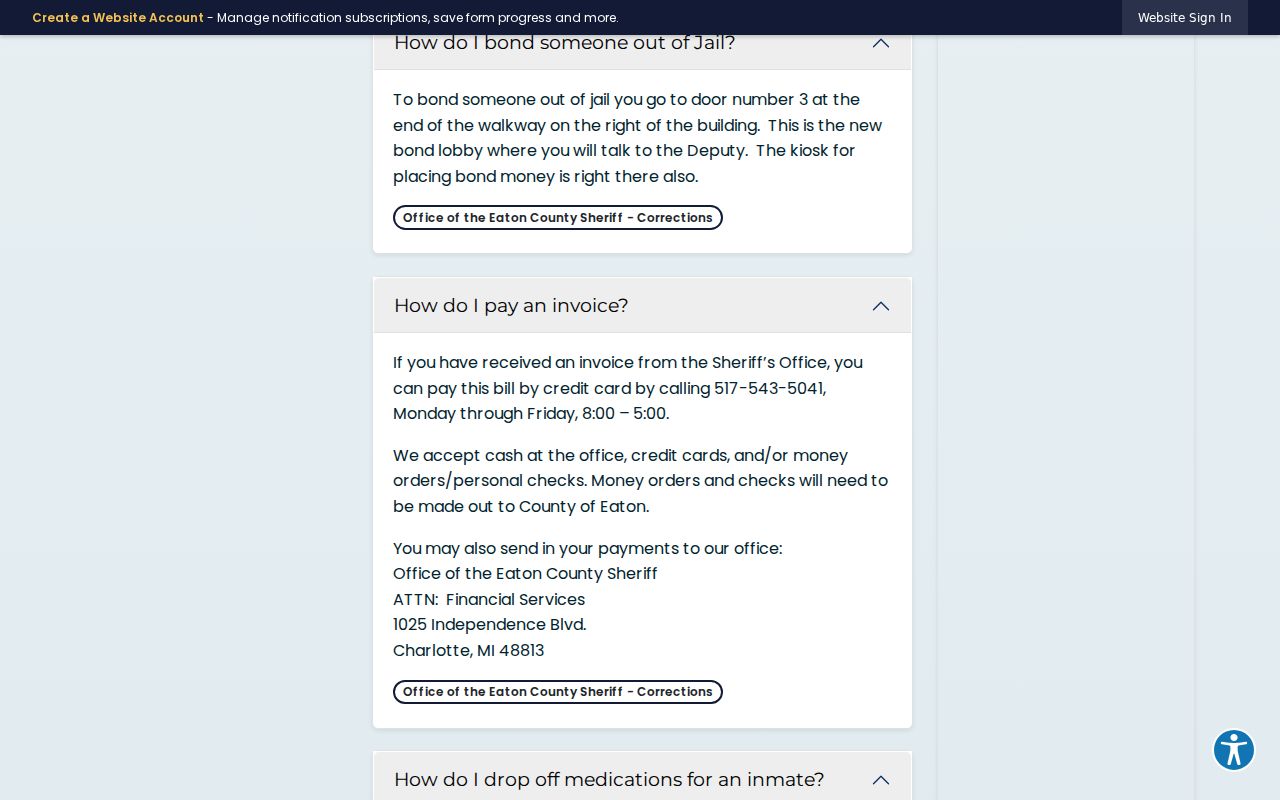
The lobby belongs to the jail, not the court. A deposit into an inmate account is not the same act as posting bond. The Eaton County Corrections Division page describes the county jail that holds people after arrest.
Bond amounts are set case by case in Eaton County. No county source publishes a standard amount.
Handling an Arrest Warrant in Your Name
An arrest warrant is the one warrant where a plan matters most. Call a licensed Michigan attorney first. Then call the issuing court. A voluntary appearance under MCR 6.105 can lead to a quick arraignment or a recall with a new date, though the rule carves out exceptions for assaultive and domestic-violence matters and for people who have used it before.
Do not wait to be found.
Contact an attorney and the issuing court before you go anywhere near a police station or courthouse.
Bring photo identification and any paperwork you have, and do not discuss the charge with anyone but your lawyer.
Only the court can recall the warrant, and only the court can change the bond.
The Circuit Court bail bond page explains the annual approved-agency process the Eaton County court uses. It is a court procedure, not a list of agents to call.
Ask the clerk which bond types the court will accept before arranging anything.
Federal Warrants and Eaton County Arrest Cases
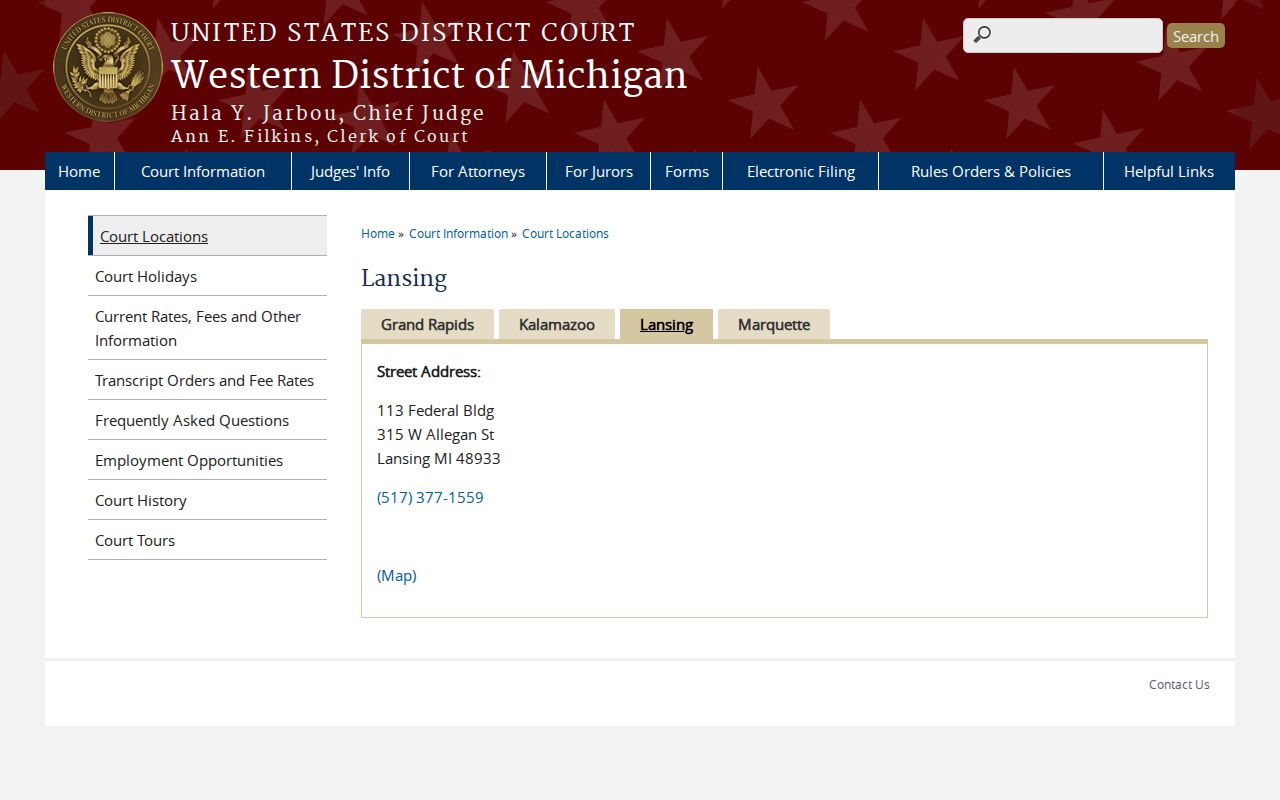
Federal cases are a different track from anything at the 56A District Court or the 56th Circuit Court. Eaton County sits in the Western District of Michigan, so those matters land at the federal courthouse in Lansing. The U.S. Marshals Service serves federal fugitive warrants, not the county sheriff. One catch: a federal arrest warrant can be sealed. A public docket search may look empty even while a warrant exists, so treat it as incomplete rather than final. The Western District of Michigan Lansing courthouse page gives the location and contact details for that court.
A federal warrant search runs through a different system than any Eaton County warrant check. Only the issuing federal court can confirm what it holds.