
Inside the Eaton County Most Wanted Program
Eaton County publishes no most wanted roster of its own. The Sheriff's Office posts no roundup event, and neither the trial court sites, the prosecutor's office, nor the city police pages carry one. What the county offers instead is a phone instruction for anyone who suspects a warrant carries their name, plus a separate number for crime tips. The statewide program itself is described by Michigan State Police on their official tip-lines page.
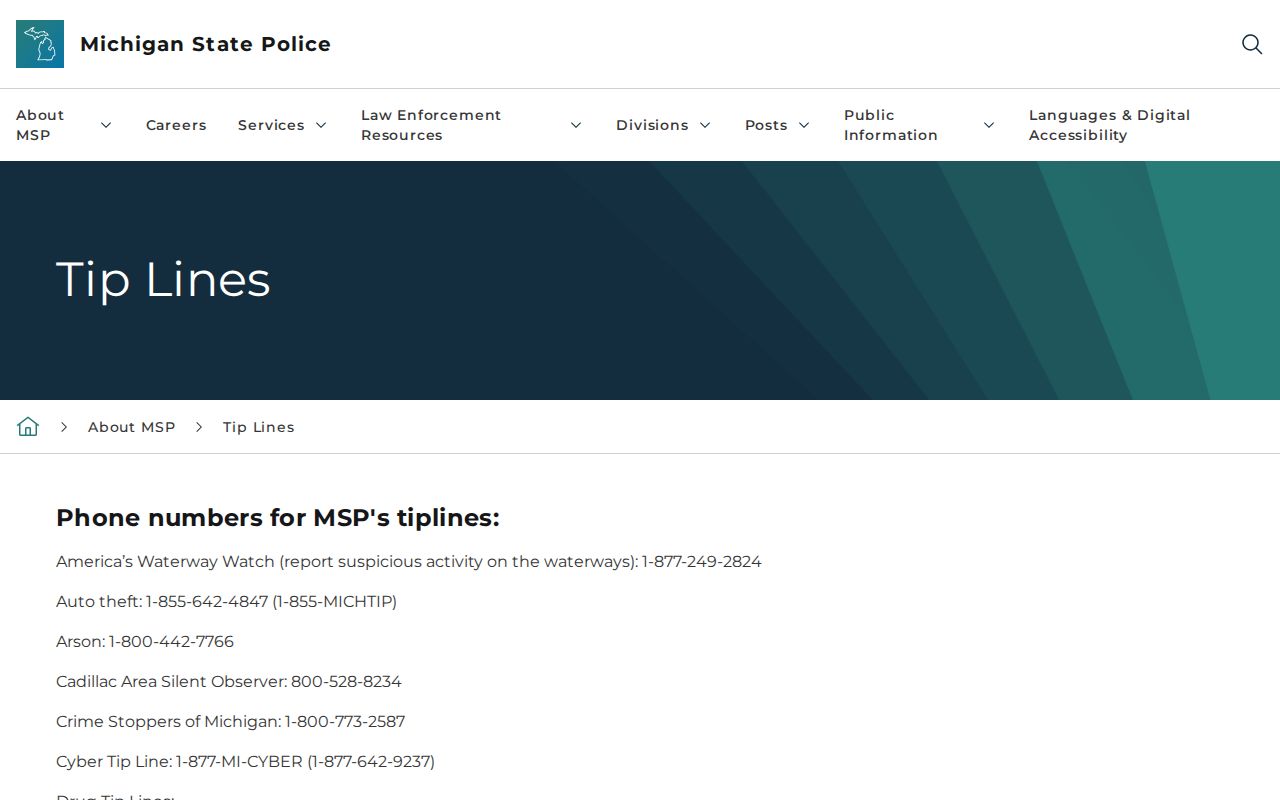
That page explains how a submitted tip reaches the agency handling the case. It prints no Eaton County roster, since none exists for the public.
Eaton County Crime Tips and Warrant Calls
Eaton County splits its phone help into two routes. The crime-tip number collects information about something that already happened. The warrant line handles a question about your own suspected warrant or a family member's. Call the wrong one and the answer slows down.
Eaton County Sheriff's Office
1025 Independence Blvd., Charlotte, MI 48813
Warrant question line: 517-543-7500, ext. 4026 on weekday business hours
Eaton County crime tips
Crime tip line: 517-543-5433
Records Division: 517-543-5247, weekdays 8:00 a.m. to 4:45 p.m.
Note: Neither Eaton County number is a public list, and neither publishes the names behind the calls.
How Eaton County Most Wanted Lists Work
A most wanted program is a hand-picked selection, never a full inventory. Agencies choose the cases they want public attention on, often after service attempts fail, and that choice belongs to the agency rather than the law. Michigan keeps its criminal-justice data locked away for a reason: the state LEIN program is restricted to authorized agencies, so the public cannot run a warrant check through it. ICHAT lets anyone request a search, yet Michigan State Police say it does not return warrant information. Case search is the practical fallback in Eaton County, through the county Public Case Search page and the statewide MiCOURT interface. Neither one works as a live warrant list.
Eaton County Most Wanted List Limits
The vocabulary around these lists overlaps, and that overlap causes most of the confusion in Eaton County. A published list, a warrant, and a tip line remain three distinct things.
- Most wanted list
- A curated set of cases an agency chooses to publicize.
- Active warrant
- Court process not shown as recalled, served, or closed.
- Outstanding warrant
- A plain synonym for an unresolved warrant, not a promise a search will show it.
- Recall
- A court action that withdraws a warrant; only the issuing court can order one.
- Tip line
- A reporting channel for crime information, apart from any records desk.
Note: A curated Eaton County list can be accurate and still incomplete. Removal from a program is not a court recall.
Eaton County Warrants on Tip Lines
The state tip-line page is the official source for program details and for passing along what you know. A posting only shows that an agency wants help locating someone. It does not prove a court has an open warrant today, and a missing posting never means no warrant, since program pages go stale. Court files follow their own access rule: Michigan Court Rule 8.119 opens court records to inspection unless a statute, a rule, or a court order restricts them.
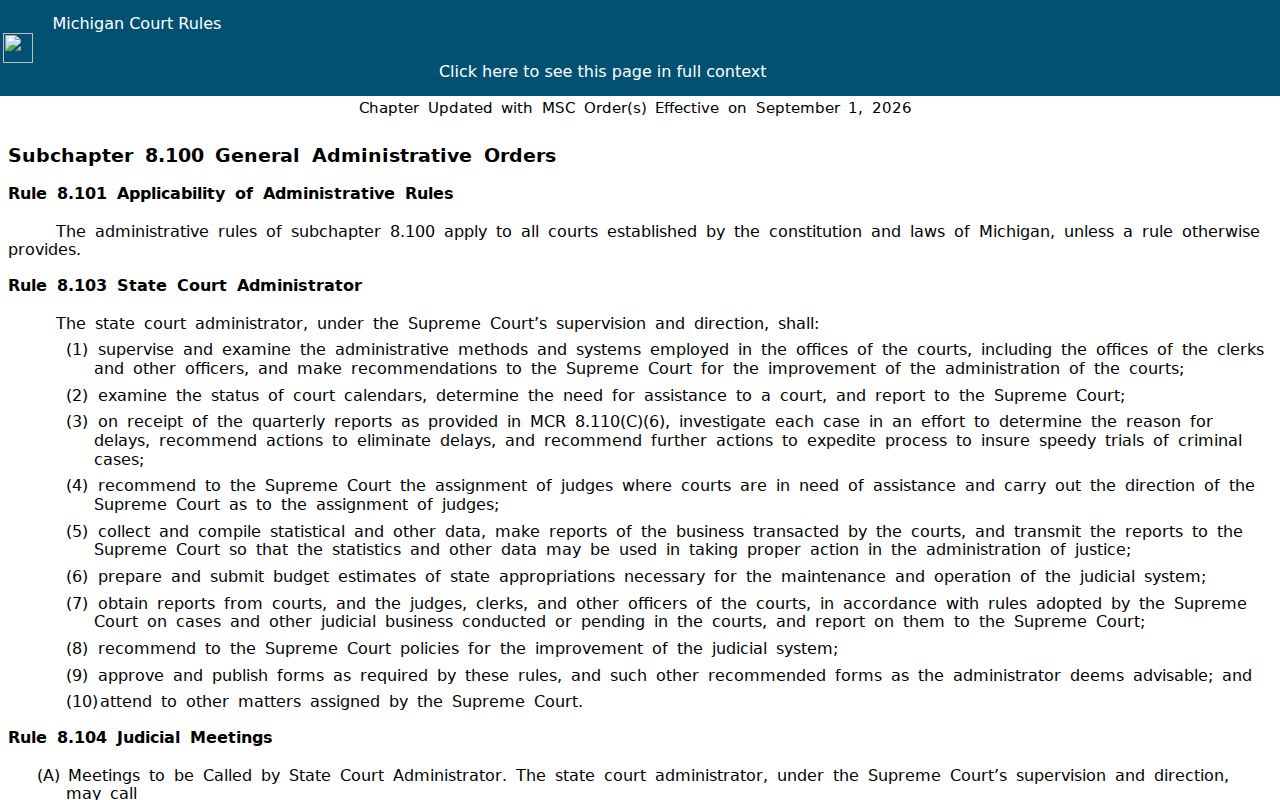
That rule is what makes the underlying case readable to the public at all.
Sending a Most Wanted Tip Safely
A tip serves Eaton County best when it is specific and goes straight to the office that asked for it.
- Note which agency published the notice and which office it asks you to contact.
- Use the published tip channel. A comment under a shared post is not a report.
- Give the time, the place, and what you saw yourself.
- Do not approach anyone or stay in a position you cannot safely leave.
- Write down when you called and who you spoke with.
- Call 911 if something is happening right now.
Key Point: A tip is information, not a complaint and not a court filing. Nothing sent through a tip line changes a warrant's status.
Eaton County Tip Lines and Warrant Checks
Callers often assume the tip line can also confirm whether a warrant is open. It cannot. The two jobs sit with different offices in Eaton County, each with its own phone number. The warrant question route is the Sheriff's published instruction for anyone who suspects a warrant carries their name. The tip route exists for crime information. A records request is a third matter entirely, and the Sheriff FOIA page names the office holding those files. Ask the court for a status, ask for the report through records, and give the tip line crime information only. Keeping those three apart is the fastest route to a real answer.
How Most Wanted Differs From an Active Warrant
A most wanted notice and an active warrant record are related, but they are not the same document in Eaton County.
| Point of Comparison | Most Wanted Notice | Active Warrant Record |
|---|---|---|
| Who publishes it | The agency running the program | The court that issued the process |
| Scope | A selected set of cases chosen for attention | Every open warrant, posted or not |
| Where it lives | A program page or a public notice | A court docket and a restricted system |
| What it proves | That an agency wants help finding someone | That process issued and has not been closed |
Note: A program covers a few Eaton County cases picked for publicity. An active warrant covers one case, posted or not.
When You Believe You Are Listed
Spotting a name in an Eaton County program notice or a forwarded post is alarming. The usual instinct is to search every site that mentions warrants.
If a warrant may carry your name: do not rely on a web search. Call the Sheriff's business-hours line or the issuing court, and speak with a licensed attorney before you appear or pay.
Eaton County has run time-limited amnesty windows for some delinquent-payment matters. The most recent program ran March 1 to April 30, 2026 across four court divisions. That window has closed, and its terms never promised blanket cancellation. Check the trial court announcements for a replacement first.
Confirming Eaton County Warrant Records
A notice is a starting point, not a court record.
- Write down the agency named in the notice and the date you saw it.
- Ask that agency which court issued the process and for a case number.
- Take the number to the 56A District Court, or to the Circuit Court Clerk for a bound-over felony.
- Ask the clerk for the current status and for the next step the court requires.
- Keep the confirmation, any receipt, and the next court date together.
Where a request heads to a county office, the Michigan Freedom of Information Act sets the response clock and what may be withheld. Juvenile files sit behind a stricter boundary under MCL 712A.28. For the wider picture, the Eaton County warrant records overview explains how process moves through the courts.