
How Municipal Court Warrants Work
Michigan lets cities write and enforce their own ordinances, and Eaton County's municipalities split the work between local desks and county ones. City police investigate and serve papers inside their own jurisdictions. A city violation bureau may take payment on municipal civil infractions. Anything that turns into a real legal action, though, belongs to the court of record, and in Eaton County that is usually the 56A District Court. That split matters more than it sounds. A city warrant can sit in a county court file, so a warrant search that stops at the city website may miss it completely.
Charlotte Ordinance Cases and Eaton County Warrants
Charlotte's 2025 ordinance shows the two tracks plainly. It sends some municipal civil infractions to a city violation bureau, where you pay locally, while state-court citations and legal actions move through the Eaton County trial courts. As the county seat, Charlotte also keeps its police department and the courthouse just minutes apart, so the walk from one desk to the other is short. Read your citation for the payment address and the court name. Those two lines decide whether a city office or a county clerk answers your warrant question. Keep one thing straight: a violation bureau collects municipal civil infractions, but it cannot recall a warrant held by a district or circuit judge. Only the Eaton County court that issued the order can do that.
Municipal Courts Across Eaton County
No Eaton County city runs its own criminal municipal court. Instead, each city's ordinance and traffic enforcement ties into the district court system. City police departments handle investigation and service inside their own jurisdictions.
| City | Court Route | What It Handles |
|---|---|---|
| Charlotte | City violation bureau and 56A District Court | Municipal civil infractions and county court actions |
| Grand Ledge | City ticket payment and 56A District Court | Parking, traffic, and misdemeanor citations |
| Eaton Rapids | City attorney and 56A District Court | Uniform Traffic Code and city code prosecutions |
| Potterville | City ordinance links and 56A District Court | City traffic and parking violations |
| Lansing (Eaton segment) | 54-A District Court for city cases | Citywide Lansing criminal and traffic matters |
Eaton County City Tickets and Warrant Records
A ticket says a person owes money or must show up. A warrant is the court order that follows when that duty goes unmet. Paying a city can settle the money side. It cannot undo a court order. The Grand Ledge pay and purchase page takes the city's ticket payments, and its processing fees are a city charge, not a court fee.
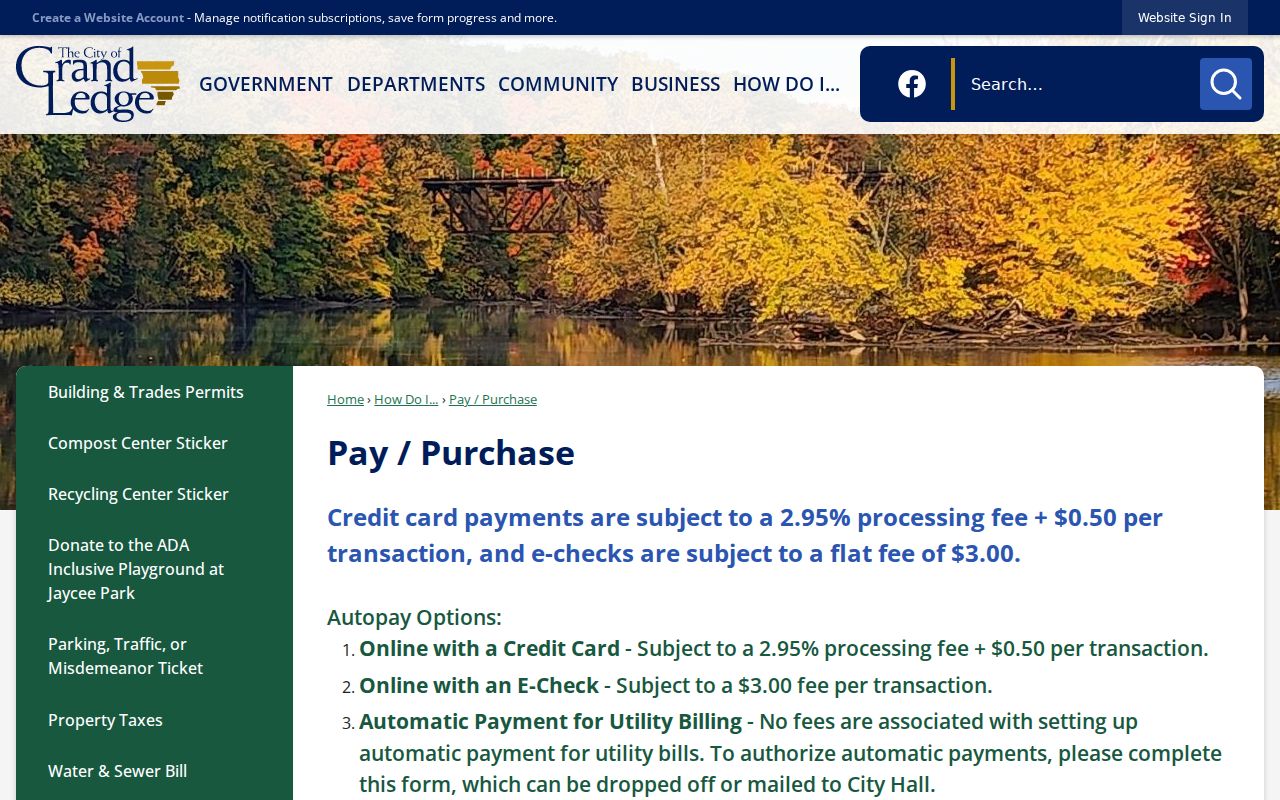
A payment made on an Eaton County city page still has to reach the court before the court's warrant record changes.
Eaton County Municipal Warrant Checks
A municipal warrant check follows the citation to the office that owns the record. Start with the Eaton County city that wrote the ticket. Then try the county court, and the sheriff if the court is still unknown.
- Read the citation or notice for a violation bureau, a city office, and a court name.
- Call the city office listed and ask whether the matter is still a city ticket or was referred to a court.
- Call the 56A District Court traffic window at 517-543-3359 or the criminal counter at 517-543-4029 for the court record.
- Call the sheriff's warrant line at 517-543-7500, extension 4026, if you do not know which court holds the case.
- File a written records request when a clerk cannot confirm the status by phone.
Eaton County Warrant Checks and City FOIA
Every Eaton County city accepts public-records requests under Michigan's open-records law, and each posts its own form and coordinator. Reports, citations, photographs, and body-camera footage all come out that way. None of it gives you an instant warrant check. The Charlotte FOIA page lays out the city's request route, including the five-business-day response target and the privacy review applied to police records.
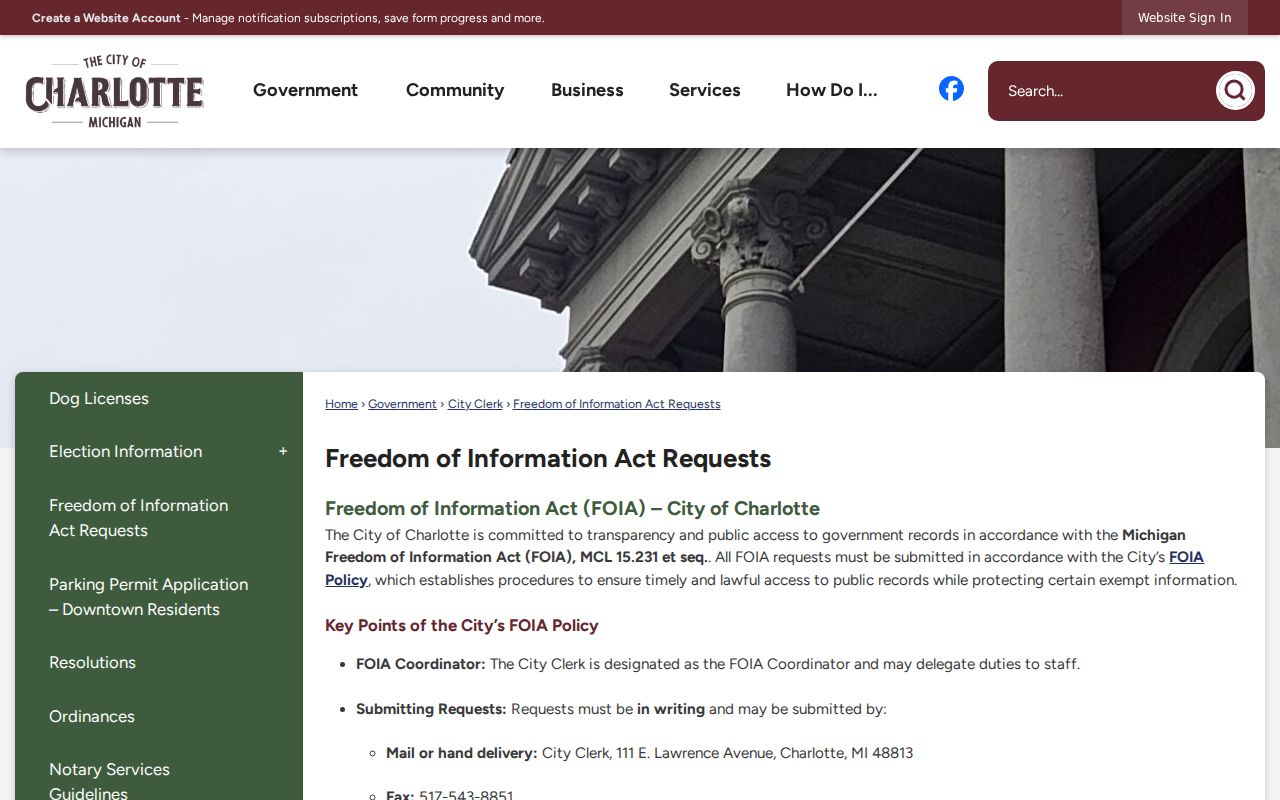
A police report can hold a warrant document yet still not show current status. For Eaton County, the court stays the place that confirms an active warrant.
Municipal Warrants: What They Show
A municipal matter that turns into a court case leaves a short paper trail. The citation number ties the Eaton County city office, the court file, and any warrant together.
| Citation number | The identifier printed on the city ticket |
|---|---|
| Violation | The municipal ordinance or traffic civil infraction |
| City office | The bureau or department that issued the citation |
| Court | The court of record when the matter becomes a legal action |
| Missed event | The payment or appearance the court recorded as incomplete |
| Status | Open, referred, warrant issued, paid, or recalled |
No Eaton County city posts a municipal warrant-number format. Just use the citation number from your own notice.
Eaton County Warrant Payments Versus Court Routing
City payment routes and court payment routes are not the same thing, and mixing them up can slow a case down. Grand Ledge posts its own ticket payment instructions, with a credit card processing charge and an e-check charge, both city fees. Potterville lists ordinance and parking links but no warrant lookup. Eaton Rapids sends ordinance and traffic prosecutions through the city attorney and the district court. Before you pay anywhere in Eaton County, ask two questions: who receives the money, and when does the court record change?
Clearing a Municipal Court Warrant
Clearing a warrant means satisfying the court, not just the city. An Eaton County clerk can tell you what the court wants, and the answer varies with the underlying violation.
- Confirm whether the case is still at the city or has been referred to the district court.
- Ask the court whether the warrant requires a payment, an appearance, or a motion.
- Complete the required step through the court's own channels.
- Bring photo identification if you appear, along with the citation and any receipt.
- Ask for written confirmation that the warrant was recalled.
Do not assume a city payment cleared a court warrant. Confirm the recall with the court, and keep the receipt until the docket shows it.
Eaton County Warrant Access for Juvenile Cases
Not every Eaton County matter is open to the public. Family division and juvenile proceedings inside the county's trial court system carry tighter access rules, and statute protects juvenile records. A support or contempt action in the Friend of Court division runs as a civil or administrative route, not an adult criminal warrant. The Eaton County Courts page lists the divisions, the courthouse contact, and the public hours for the building where those files sit.
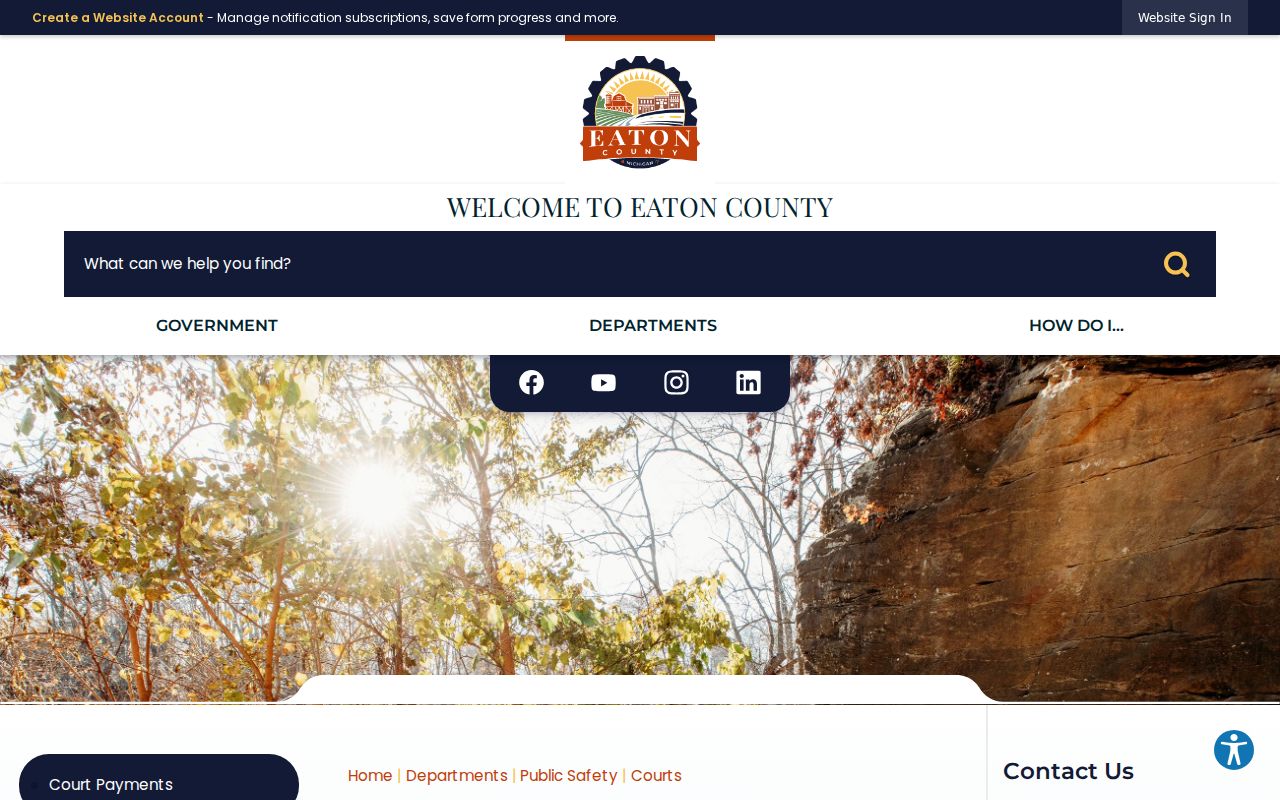
Ask the division clerk about access before requesting a family or juvenile record.